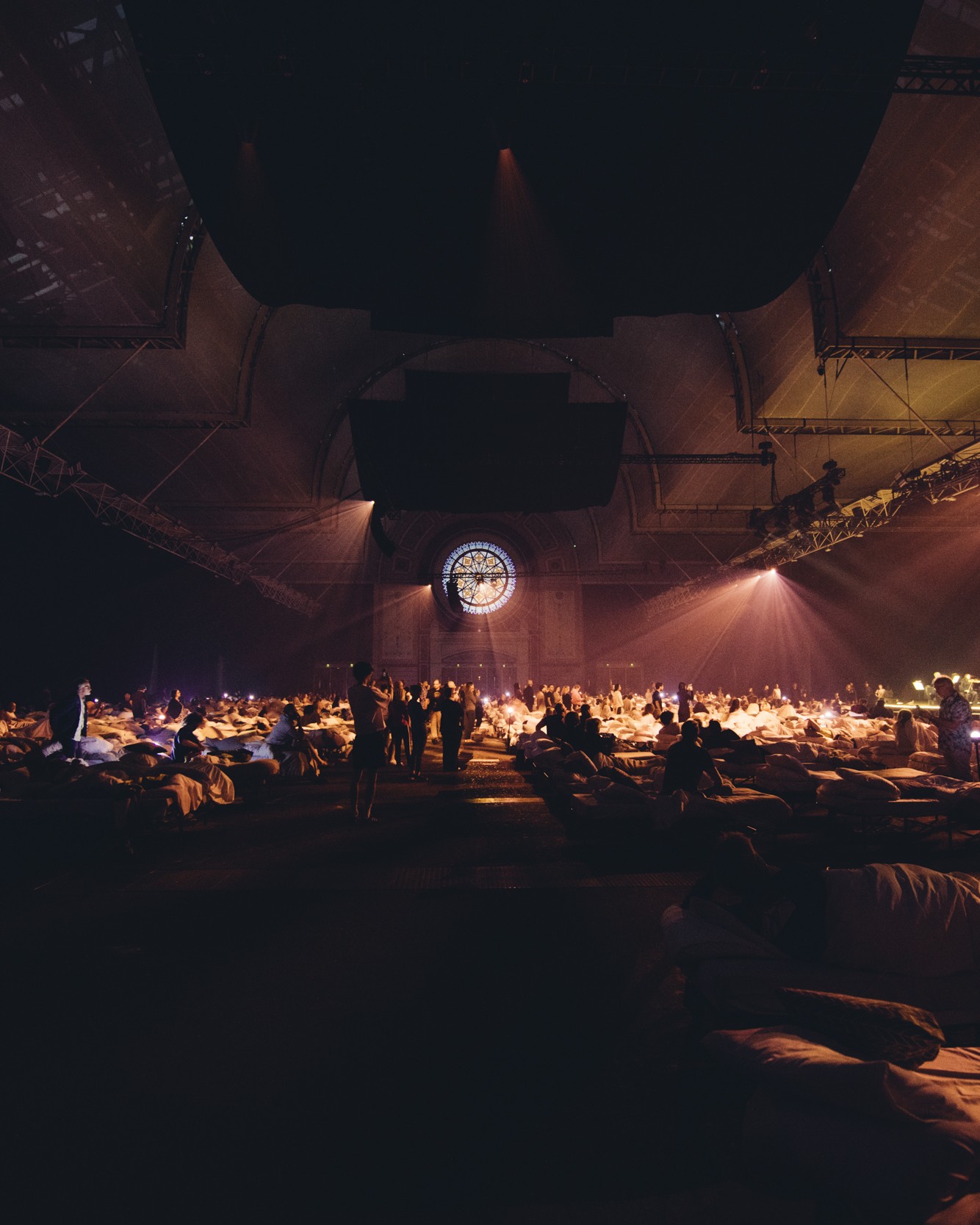
A former power plant on the border of Mitte and Kreuzberg hosts Berlin Atonal, a festival of sonic and visual art that began in 1982 and was relaunched in 2013. A wharf shed in Hobart holds Dark Mofo's Winter Feast across seven nights each June. A shopping-centre parking deck in Neukölln has been a rooftop garden and club platform, Klunkerkranich, since 2013. Alexandra Palace's Great Hall was filled with more than 900 beds for Max Richter's eight-hour SLEEP. And the roof of the Bussey Building in Peckham turns into a cinema every summer.
None of these were built for the night they now host. That is the point, and also the problem.
What they share
- Scale that a purpose-built venue would charge a premium for: high ceilings, long runs of floor, a roofline.
- A character the programme does not have to supply. The room is the set design.
- Awkward logistics: lifts, loading docks, noise limits, no kitchen. Each one needs a vendor who has done it before.
- A committed audience. People will travel for a place they cannot find elsewhere.
Questions to ask before you book
- Who holds the licence for the space, and for what capacity and hours?
- Where does power come from, and is it enough for sound and lighting?
- How do guests get in and out: a lift, a stairwell, a goods entrance?
- What is the cost of bringing in the things the building lacks: toilets, a bar, heating, a cloakroom?
- Who else uses it, and what is the sound situation with the neighbours?
The best of these rooms treat the awkwardness as a feature. At Klunkerkranich the access is a lift to the fifth floor and then further up, and that climb is part of the pitch. Plan for the quirks, and the room will repay you.
READ
From the Night
More stories and guides from Hoost.