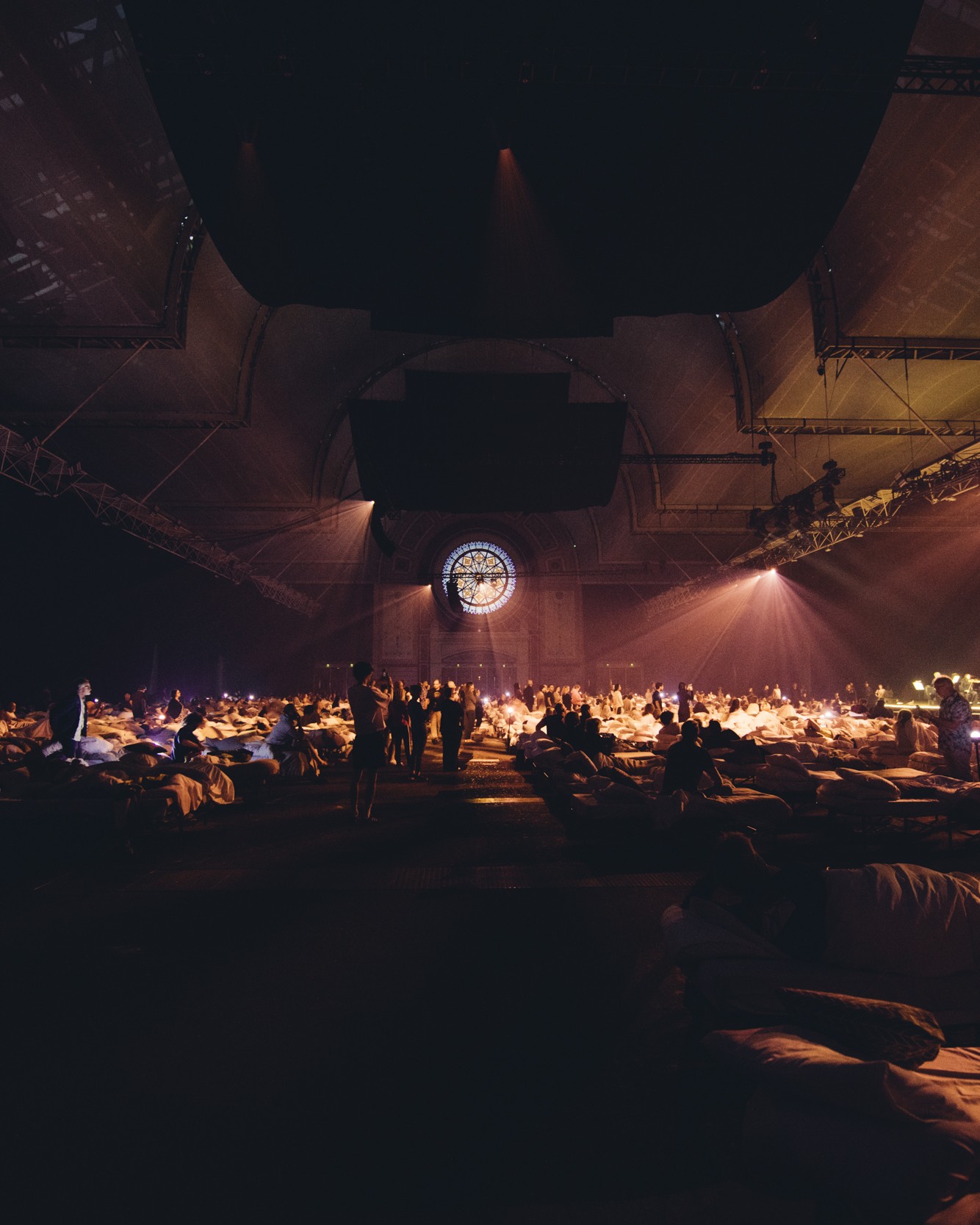
Berlin Atonal first ran from 1982 to 1990, mostly at SO36 in Kreuzberg, under the direction of Dimitri Hegemann. It returned in 2013 under new direction, led by Laurens von Oswald and Harry Glass, and now takes place at Kraftwerk Berlin, a former power plant on the border of Mitte and Kreuzberg.
The festival presents itself as a gathering for sonic and visual art, covering sound, visual and media art, installation and performance, with an emphasis on commissions and world premieres. Each edition involves hundreds of musicians, choreographers, and sound and visual artists. The 2025 edition, which one writer for CLOT described as five days of noise and darkness in the looming corridors of the building, is a good example of how the venue shapes the programme.
What the building does
A power station is built for scale. Its concrete shell gives artists height and depth they would never get in a theatre, and haze and beams of light read as structures rather than effects. The corridors around the main hall become listening rooms and installation spaces, which means the programme can run on several scales at once: a huge room for the headline sets and small rooms for the quiet ones.
- Let the venue set the palette. Concrete and haze suit a monochrome look; fighting it is expensive.
- Use side spaces for slower work, so the main hall can be loud.
- Commission for the room. Premieres built around the building will always outrun imported shows.
- Allow for long, multi-day stamina: rest areas, food and clear wayfinding.
READ
From the Night
More stories and guides from Hoost.